

4·
13 days agoI love the unchanged guy on the left.
I once met a person that never drank water, only soft drinks. It’s not the unhealthiness of this that disturbed me, but the fact they did it without the requisite paperwork.
Unlike those disorganised people I have a formal waiver. I primarily drink steam and crushed glaciers.
I love the unchanged guy on the left.

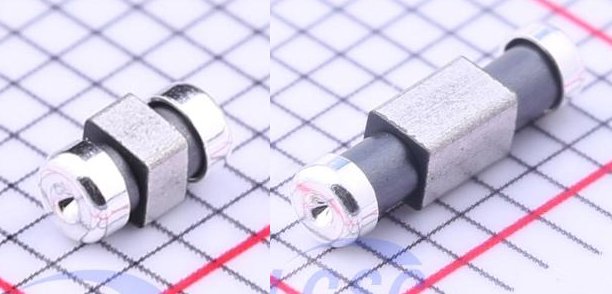
Is it a 3-terminal device? You may have to desolder it to find out. That also lets you poke around with the insides (hollow? layers?)
Probably a capacitor, either 2 terminal or 3 terminal. I was originally thinking GDT but it looks like even the SMD varieties are mostly cylindrical shaped rather than rectangular prism.

The study: https://onlinelibrary.wiley.com/doi/10.1111/aec.70174 (not free)
I hate news articles that do not link to their sources and I hate paywalled science. If people have no legal or free way of verifying the claims made then they’ll choose sides from these news articles based on rhetoric, not science.

In my heart I’m imagining the bike lane is next to the tracks, so it can avoid road crossings. I suspect this won’t be true, but until I’m proven otherwise my imagination will not relent.

plus a phosphorus layer on top that smooths those two perfect lightwave color peaks in the wavelength domain into a broader light spectrum
The phosphor absorbs some of the blue and downconverts it to green and red. Some of the blue is let through for us to see. The mixture of R, G and B looks like white to us (but not necessarily to other animals with different cones in their eyes).
2 kinds of light emiting diode (LED) junctions inside - red and blue
I’ve never seen a red LED die inside a white LED. I’ve only ever seen blue dies on their own.
Technically UV-pumped white LEDs exist, but they’re rare and I’ve never seen one. They’re less efficient and require a third phosphor (to make the blue).
You can remove the yellowish looking phosphors on the LED with a small pick to reveal the blue die underneath. Fun fact: some high-power “red” LEDs are actually blue leds + phosphors, not that it’s a particularly good choice but it’s a thing: https://halestrom.net/darksleep/blog/018_led_cob_cutting/
Master was easy (18 mins), still stuck on the expert one though. My solutions almost work :(

Site seems offline now, says “Closed Jan 30th”
Something to be wary of when interpreting the datasheet:
- Act10 = LED blinking when Ethernet packets transmitted/received at 10Mbps.
- Act100 = …
- Act1000 = …
Bad wording on their part. What they really mean is: “LED blinking when Ethernet packets transmitted/received AND the link is currently in a XYZMbps link speed mode”. The mode is negotiated once after you plug a cable in and usually does not change after that, regardless of how much data you try to send.
Technically each linkspeed/mode is a whole ethernet standard of its own, but we mostly gloss over that and pretend to end users that they’re backwards compatible.

Similar here.
Family is mostly OK on it. We used to have issues with iOS devices not noticing some new messages & calls, but that seems to have stopped a few months ago. Family is usually impatient about me getting to my phone and rings me using 3 different services in a row, one of them Snikket xD
Have not yet managed to get any friends onto it.
My boss told me this is due to the skills shortage.

The paper type? Has it all compressed or gone mouldy?
Thing is, its EOL, per Asus. Does this mean that it won’t be supported on OpenWRT for much longer?
OpenWRT tends to support devices longer and better than the OEM, but it depends on the popularity of the chipset inside the router.
Many different routers by different companies are almost identical internally, because they use the same chipset. Eg the RT-AC3100 seems to be a bcm53xx variant, of which OpenWRT supports a few dozen products. Support will probably only be dropped when every single one of those devices goes EOL and several years pass (ie no people left contributing/maintaining it and the builds break somehow).
Router chipsets can be very long lived. Many new devices use decade old chipset designs. Some chipset families have almost identical chips released every few years with slightly different peripherals, clocks & pinouts; but are supported by the same kernel drivers.
(This is all much better than the world of mobile phone hardware support. Maybe it’s because of different market pressures? Not to mention you don’t have a monopoly that benefits from keeping the hardware fractured. Imagine if people could make a competitor to Android that works across most devices out there)

My mental headline for this is about size.
I wish the backrooms were real. The monsters are no match for realestate agents, so it’d be pretty safe to rent.
As far as I understand, wireguard is designed so that it can’t be portscanned. Replies are never sent to packets unless they pass full auth.
This is both a blessing and a curse. It unfortunately means that if you misconfigure a key then your packets get silently ignored by the other party, no error messages or the likes, it’s as if the other party doesn’t exist.
EDIT: Yep, as per https://www.wireguard.com/protocol/
In fact, the server does not even respond at all to an unauthorized client; it is silent and invisible.
It’s completely off screen :(

I’ve had some other friends mention only a tiny increase. Surprising.

Arrest this man
Forgot about that. Stainless steel fridges get left with a shadow if you leave them on too long xD





















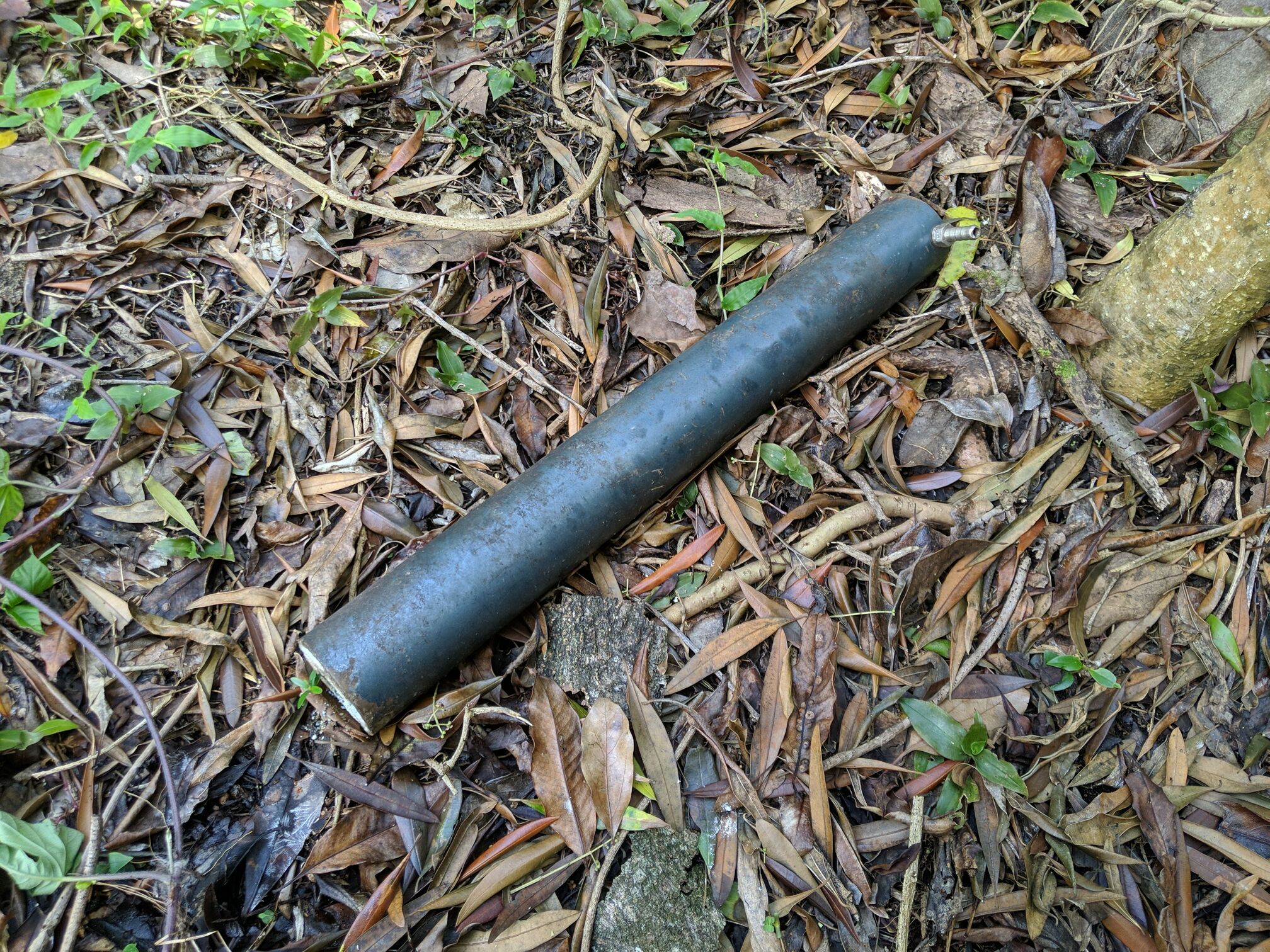
Crap, I do not.